My Father’s Jacket
More than a story about a sport jacket. It brings me home to what it means to be a man—a human being. I hope it helps you remember, too.
My voice is here if you want it—but the words stand on their own.
When my dad passed away, I decided to keep a few things of his that I knew he liked.
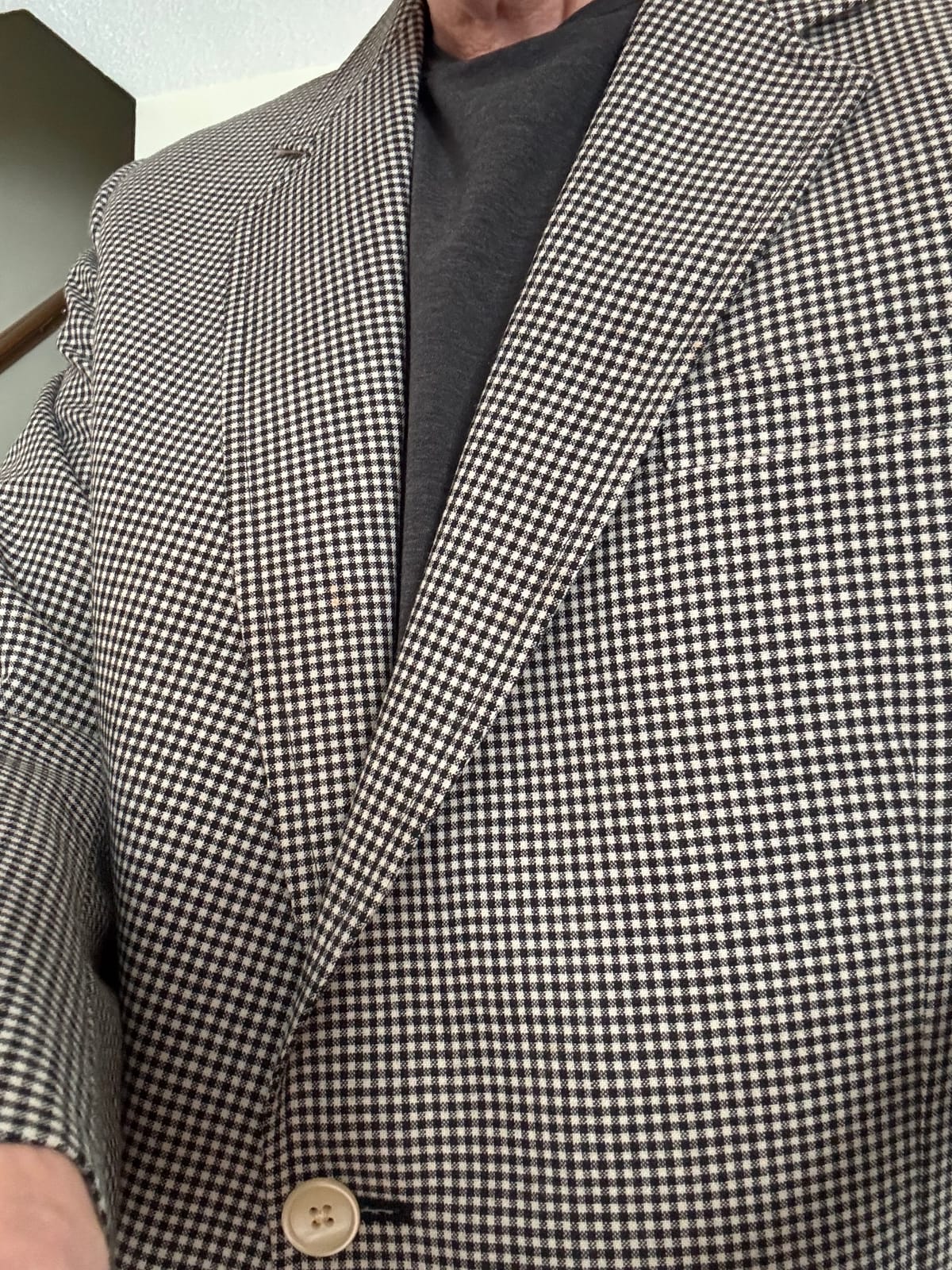
One of these was a black-and-white checkered sport jacket that he might wear out to dinner with my mom while on vacation in the Bahamas.
I've never worn the jacket in public. It hangs silently with the overcoats in my front closet, almost like it's waiting for my dad to arrive and wear it again.
My wife asks me occasionally why I keep it. I don't have a great answer. I just tell her that it makes me feel closer to my dad. She eventually stopped asking.
I'm not sure I really like it. It isn't something I would choose for myself. But when I look at it, I think of my dad and how proud he would be wearing it.
I think he bought it at a time when he had lost some weight and felt better about himself. He probably paid top dollar at the time—fifty bucks. It made him feel like a million.
My dad liked his clothes, and would give them names—like personal friends. I think he called this his "Charlie Brown." But other times he would refer to them by the famous label inside.
I don’t think this one was the name of the store or the brand. Just his relationship with the salesman who treated him like a king. They would even give him a call from time to time to let him know they had something new they thought he would like.
With his gray fedora on top, it helped him walk tall in a body that often betrayed him—one he didn't always take great care of.
That was my brother—who also died before his time. That's me, too.
When I put on that jacket, I imagine walking tall—maybe even running by the lake near my home in Bomoseen, Vermont.
Having lost some of my own mobility, keeping that jacket in the front closet gives me hope there will be a time when this happens again.
In the meantime, I can try it on occasionally to let my dad know I haven't forgotten him—and that I meant a lot to him as well. Just man to man. Walking together again.
Oh, I just noticed that his beloved black overcoat is still in the closet—just in case it’s raining or cold outside. I can definitely use that these days. We all can.
I might even wipe off the layers of dust on its shoulders so it doesn‘t weigh me down or disrespect anyone I’m with.
Knowing my vulnerability and courage—quiet strength as I say—I want to keep moving forward in hard times, not hiding behind a mask of bravado.
Yeah, there’s always a little—but real men don’t need to hide. With his well-cut silver hair, my dad had to do his part to match the beauty and elegance of my mom, who took even more care in her dress and accessories—not a hair out of place.
Descending from Eastern European Jewish immigrants who fled from tyranny, and from parents who lived through the Depression and a world war, this story isn’t just about nostalgia and loss.
Although there’s plenty of that between the lines, it’s about identity and feeling proud of where we've come from, while holding onto the hope of freedom and a brighter tomorrow.
Perhaps it‘s the Charlie Brown inside all of us that keeps the light burning. My parents taught me to never forget that, and to always hold the hope, so others won’t lose it—and feel invisible.
That would be like forgetting our Core Self—and that’s who we were born to be.
That’s something worth fighting for and reclaiming as our own—to pass down from generation to generation.
Here’s looking at you, kid. Walk tall in your father’s jacket and let it take you home. I’ll still be there—in heart.
Gratitude: In appreciation of those who have shared their light and sweetness with me over the years—and received mine.
Confidentiality note: Any resemblance to your own life is both coincidental and universal—reminding us that our stories echo one another in the shared fabric of human experience.
Comments or questions? Email me at mcecilvt@aol.com. Feel free to share in r these words—and this blog—with anyone you hold close or long to be held.
Dr. Cecil is a licensed psychologist, certified AEDP supervisor, approved EMDR consultant, and senior CSRT consultant. He specializes in treating complex relational, developmental, and transgenerational trauma, bringing therapy to life through heartfelt stories and images of connection and healing that emerge from the light of invisibility.