Raising the Bar
Sometimes the hardest lift isn’t physical—it’s believing something inside you is strong enough to rise.
Whether you choose to read this piece yourself, or listen to me read it, you will be starting to raise your own bar.
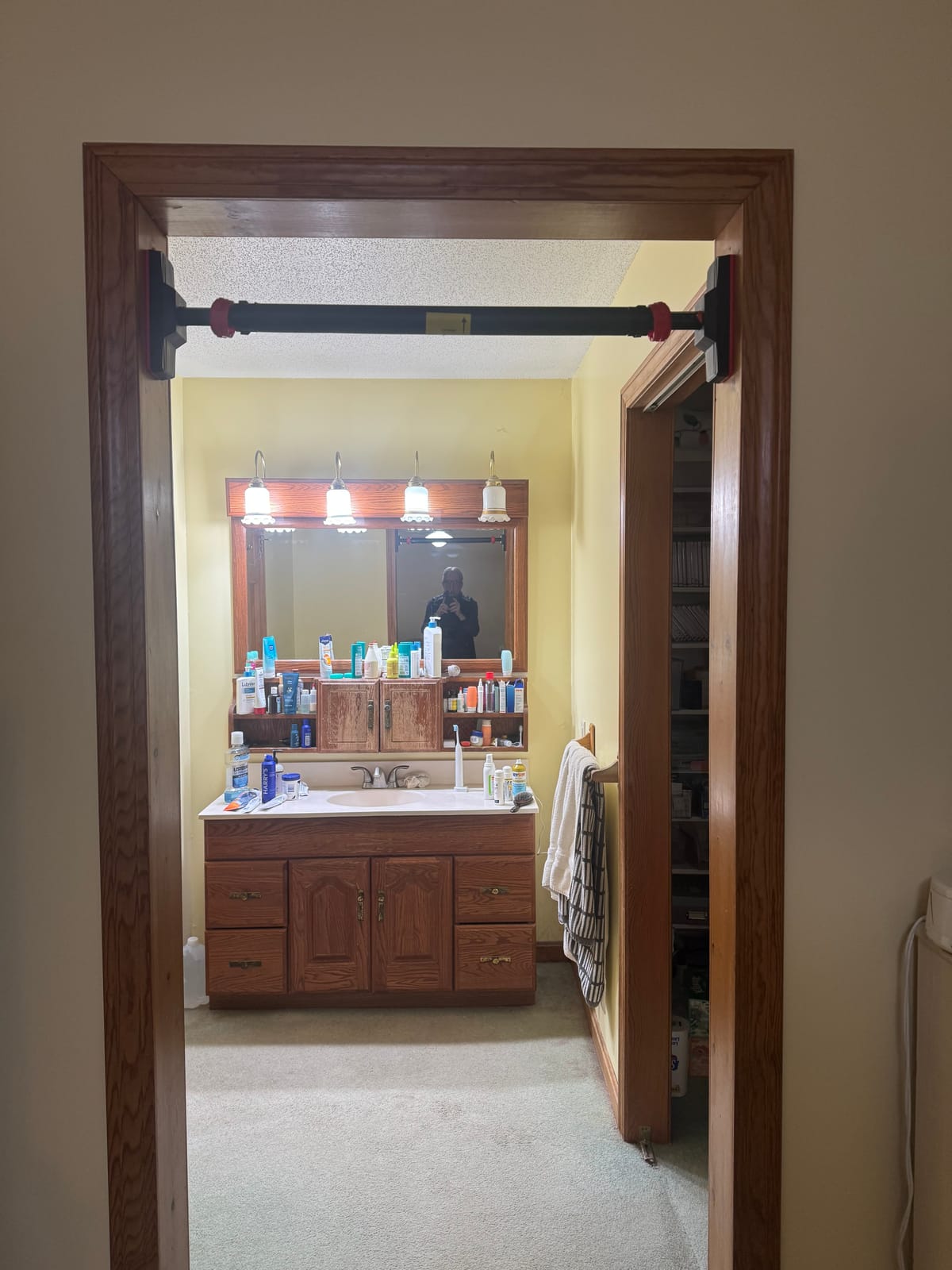
I just bought a pull-up bar to strengthen my aging muscles—one more reminder of the passage of time. The problem is, I can’t even do a single chin-up—yet.
I keep looking at that bar, knowing it's important to keep trying. I just have to take the first step—like learning to walk again.
I take a leap—literally and figuratively. Gathering my courage, I bow and surrender to the bar—taking a deep knee bend and letting my body hang limp for a moment—waiting for more.
And then I jump, pulling my legs toward my chest.
Oh my God, I was flying for three seconds before I could no longer hold my weight. What was I thinking? I'm not Superman—but for a brief time I was. I felt my body awaken—strengthening all the way to my core.
It wasn’t much—but something inside me knew it was enough. I felt proud of myself. I was enough.
There it is—another metaphor I can bring into my work. In that moment, my life became more real—reminding me where so many people are when they first begin their healing journey, whatever form it takes.
Many feel defeated and want to give up. But there’s something inside that tells them that they have the capacity to do better. They just aren’t sure what’s blocking them from raising the bar.
Often, it goes back to what we learned early on about our power when faced with adversity or challenges in our lives.
The words are familiar: It won’t make a difference. So why even try? We give up before we even start.
That’s easy to see in those who’ve been treated poorly and carry visible scars inside and out. But it also applies to the vast majority of us who’ve been traumatized—especially those who never knew it.
Trauma isn't just what happens to us that others can see. There’s another kind—often invisible, even when all others see is the light in your life. And they say, “What do you have to complain about? At least you have food and a roof over your head.”
Or what kids are sometimes told that hits me the hardest: “Why are you doing this to me? You’re just trying to get attention.”
That experience has a name: relational or developmental trauma. It often comes in the form of mixed messages that minimize our feelings and dismiss our needs. It communicates that there are strings attached to love—you’re only worthy if you do what others say and earn their approval.
They’re like little stabs in our heart—over time becoming big holes that don't completely heal. And we don't understand why we’re still bleeding, so there must be something wrong with us.
There’s no shortage of diagnoses, so it's easy to find something to label ourselves—and have someone confirm it.
What’s hard to see is not what happens to you, but what doesn’t happen—what you needed in order to know you are loved and that you truly matter.
For me, it’s the little things that mean the most—the ones that tell us we’re loved and that others care.
But if we don't receive them, we never learn how important they are. And then, we don't give them to others consistently—even those we love the most.
This extends outside our relationships and families, too—to places like schools and work, even in our country and our culture. It can also happen before we’re verbal—sometimes before we’re born. Our bodies remember and continue to keep the score throughout our lives.
That's a lot. Let's take a breath—me too. Notice if anything is stirring inside. I know my words can bring up some pain—past and present. Don’t worry. We all have to start somewhere. And you’re not alone anymore.
Dealing with trauma isn't just about seeing what’s right in front of us. It’s about seeing what we’re missing and completing the picture. In therapy, it can feel like finding the missing piece of a puzzle. Then, when you finally find it, it can reveal another layer of pain underneath.
I know it's hard. No one ever said life would be easy or fair. Yeah, I know. I grew up with The Brady Bunch and Leave it to Beaver. Even now, with reality shows, I’m not sure it’s that much different. In some ways, I think it’s even worse.
Like many of us, I learned my hardest lessons at the school of hard knocks. I took a few over the years—experiences that shaped how I protected myself and covered up what hurt.
But that only works for so long. It begins to break down as we get older and life gets more complicated—what started as relational trauma can become much more entrenched.
So come on now, let’s raise the bar—especially when trauma hides in plain sight—inside and out. I know that many of us are doing the best we can. But with a little help from friends and those who’ve walked this path with others, we can do better—not perfectly, but with honesty and humanness.
Don't worry about doing chin-ups if that's not your thing. But put your chin up—and do something. It’s time to get moving again—and to stop hiding from yourself in a state of learned helplessness.
The light of invisibility already knows this truth—and is rising within you. Do one hard thing a day and see if it makes a difference. Notice what that’s like. Pass it forward, and feel proud of who you are and who you’re becoming.
It’s okay to be different. It always has been.
Even though we can't see it, that’s our Core Self—and we can feel it. We may not be perfect—but we don't need to be. After all, we’re perfectly human.
We’re the ones who can raise the bar—to be the person we were always meant to be. Our future is now. We’re rising—together.
Something inside you already knows how. First you bend your knees and hang—then you leap.
A deep bow to all of you doing this heavy lifting.
Gratitude: In appreciation of those who have shared their light and sweetness with me over the years—and received mine.
Confidentiality note: Any resemblance to your own life is both coincidental and universal—reminding us that our stories echo one another in the shared fabric of human experience.
Comments or questions? Email me at mcecilvt@aol.com. Feel free to share these words—and this blog—with anyone you hold close or long to be held.
Dr. Cecil is a licensed psychologist, certified AEDP supervisor, approved EMDR consultant, and senior CSRT consultant. He specializes in treating complex relational, developmental, and transgenerational trauma, bringing therapy to life through heartfelt stories and images of connection and healing that emerge from the light of invisibility.